The Belfry CE VA Primary School
Personal, Social & Emotional Development
This prime area focusses on supporting children's self-awareness, self-esteem, emotional regulation, and building positive relationships.
At The Belfry, we strive to enable children to feel safe and happy and to become kind, thoughtful and independent members of our class and school community. We support all children to be able to identify the range of feelings and emotions that they may experience. Using age appropriate stories or puppets, we explore different scenarios when they may encounter these feelings and think about ways to deal with them in a positive way. We support children to begin to think about how their choices and behaviour can impact others, and model ways to deal with conflict in a calm and appropriate manner. We also introduce rules and clear consistent boundaries through our development of class values and by modelling and recognising good behaviour. We have a ‘child of the day’ who sits in a special chair, completes special jobs and receives compliments from their teachers and friends, supporting the development of good self-esteem in all the members of our class.
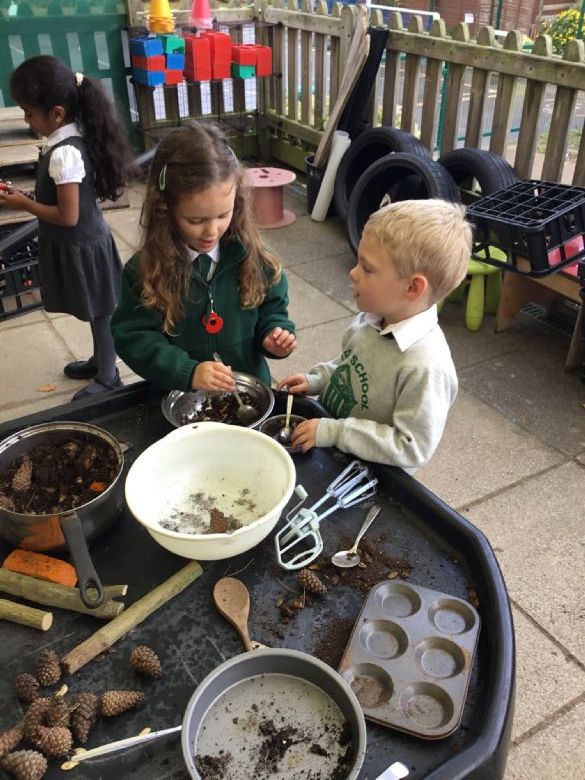
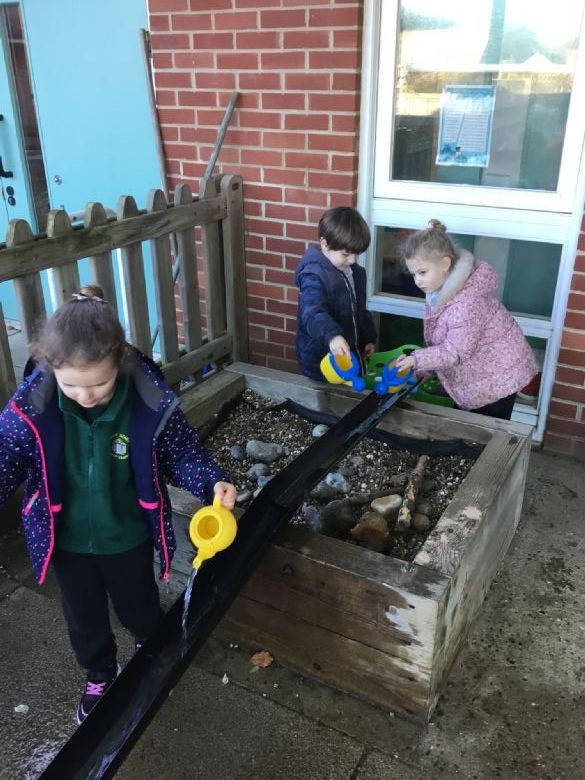
Throughout the day, the children are supported to interact and engage with their peers. We incorporate opportunities for them to be able to work together both during the whole class teaching inputs, small group work or during their child-led play, modelling and encouraging turn-taking and negotiation skills. We aim for all children to develop independent skills needed to engage in the daily routines of school life, such as putting on their coat to go outside or washing their hands.
Early Learning Goals
Self-regulation
- Show an understanding of their own feelings and those of others, and begin to regulate their behaviour accordingly.
- Set and work towards simple goals, being able to wait for what they want and control their immediate impulses when appropriate.
- Give focused attention to what the teacher says, responding appropriately even when engaged in activity, and show an ability to follow instructions involving several ideas or actions
Managing self
- Be confident to try new activities and show independence, resilience and perseverance in the face of challenge.
- Explain the reasons for rules, know right from wrong and try to behave accordingly.
- Manage their own basic hygiene and personal needs, including dressing, going to the toilet and understanding the importance of healthy food choices.
Building relationships
- Work and play cooperatively and take turns with others.
- Form positive attachments to adults and friendships with peers.
- Show sensitivity to their own and to others’ needs.